Keep Your Fur Babies During the Cold Meme
Yous're probably already aware of the risks posed by warm conditions and leaving pets in hot cars, simply did you know that cold weather also poses serious threats to your pets' wellness?
Here are some tips to keep your pets rubber during cold weather:
Winter wellness: Has your pet had his/her preventive care exam (health test) yet? Cold weather may worsen some medical weather condition such as arthritis. Your pet should exist examined by a veterinary at to the lowest degree one time a year, and it's as good a time as any to get him/her checked out to make certain (s)he is prepare and as healthy as possible for cold weather.
Know the limits: Merely similar people, pets' cold tolerance tin vary from pet to pet based on their glaze, trunk fatty stores, activity level, and health. Be aware of your pet's tolerance for cold weather, and adjust accordingly. You will probably need to shorten your canis familiaris'due south walks in very cold atmospheric condition to protect you lot both from weather condition-associated health risks. Arthritic and elderly pets may have more difficulty walking on snowfall and ice and may be more prone to slipping and falling. Long-haired or thick-coated dogs tend to be more cold-tolerant, just are even so at risk in cold atmospheric condition. Brusque-haired pets experience the cold faster because they have less protection, and short-legged pets may become cold faster because their bellies and bodies are more likely to come into contact with snow-covered footing. Pets with diabetes, heart disease, kidney disease, or hormonal imbalances (such every bit Cushing's disease) may have a harder time regulating their body temperature, and may be more susceptible to problems from temperature extremes. The aforementioned goes for very young and very old pets. If you demand assistance determining your pet's temperature limits, consult your veterinary.
Provide choices: Just like you, pets prefer comfortable sleeping places and may change their location based on their need for more or less warmth. Give them some safe options to allow them to vary their sleeping place to adjust to their needs.
Stay inside. Cats and dogs should be kept within during cold weather. It's a mutual belief that dogs and cats are more resistant than people to common cold weather considering of their fur, just it's untrue. Like people, cats and dogs are susceptible to frostbite and hypothermia and should be kept inside. Longer-haired and thick-coated dog breeds, such as huskies and other dogs bred for colder climates, are more than tolerant of cold weather; but no pet should be left outside for long periods in below-freezing conditions.
Make some noise: A warm vehicle engine can exist an highly-seasoned heat source for outdoor and feral cats, but it's deadly. Check underneath your machine, bang on the hood, and honk the horn before starting the engine to encourage feline hitchhikers to carelessness their roost nether the hood.
Check the paws: Bank check your dog'south paws oftentimes for signs of cold-weather injury or damage, such equally cracked paw pads or bleeding. During a walk, a sudden lameness may be due to an injury or may be due to ice accumulation between his/her toes. You lot may be able to reduce the risk of iceball accumulation past clipping the hair between your domestic dog's toes.
Play dress-up: If your dog has a brusque coat or seems bothered by the cold weather, consider a sweater or dog coat. Have several on hand, so you can use a dry sweater or coat each time your dog goes exterior. Wet sweaters or coats tin can actually brand your dog colder. Some pet owners also use booties to protect their dog's anxiety; if you cull to use them, make certain they fit properly.
Wipe down: During walks, your dog'southward feet, legs and belly may pick up deicers, antifreeze, or other chemicals that could be toxic. When you get back inside, wipe down (or wash) your pet's feet, legs and belly to remove these chemicals and reduce the risk that your domestic dog will be poisoned later on (s)he licks them off of his/her feet or fur. Consider using pet-safe deicers on your property to protect your pets and the others in your neighborhood.
Collar and bit: Many pets become lost in winter because snow and ice can hide recognizable scents that might normally help your pet find his/her way back habitation. Make sure your pet has a well-fitting neckband with up-to-engagement identification and contact information. A microchip is a more permanent means of identification, but it'southward critical that you keep the registration up to date.
Stay home: Hot cars are a known threat to pets, merely cold cars as well pose significant risk to your pet's health. You lot're already familiar with how a car can rapidly cool down in cold weather; it becomes similar a fridge, and can rapidly chill your pet. Pets that are young, old, sick, or thin are particularly susceptible to common cold environments and should never be left in cold cars. Limit automobile travel to only that which is necessary, and don't go out your pet unattended in the vehicle.
Prevent poisoning: Clean up any antifreeze spills apace, every bit even small amounts of antifreeze tin can exist deadly. Brand certain your pets don't have access to medication bottles, household chemicals, potentially toxic foods such as onions, xylitol (a saccharide substitute) and chocolate.
Protect family: Odds are your pet volition be spending more time inside during the winter, so it's a good time to brand sure your house is properly pet-proofed. Utilise infinite heaters with caution around pets, because they can burn or they tin be knocked over, potentially starting a fire. Check your furnace earlier the cold conditions sets in to brand sure it's working efficiently, and install carbon monoxide detectors to keep your entire family prophylactic from damage. If you have a pet bird, make certain its cage is abroad from drafts.
Avert ice: When walking your canis familiaris, stay away from frozen ponds, lakes and other water. You don't know if the ice volition support your canis familiaris's weight, and if your dog breaks through the water ice information technology could be deadly. And if this happens and you instinctively attempt to salvage your dog, both of your lives could be in jeopardy.
Provide shelter: We don't recommend keeping whatever pet exterior for long periods of time, but if you lot are unable to go on your dog inside during cold weather, provide him/her with a warm, solid shelter confronting wind. Make sure that they take unlimited access to fresh, non-frozen h2o (past changing the water frequently or using a pet-prophylactic, heated water basin). The flooring of the shelter should be off of the ground (to minimize heat loss into the ground) and the bedding should exist thick, dry and inverse regularly to provide a warm, dry out environs. The door to the shelter should be positioned abroad from prevailing winds. Infinite heaters and heat lamps should be avoided because of the risk of burns or burn. Heated pet mats should too be used with caution because they are notwithstanding capable of causing burns.
Recognize problems: If your pet is whining, shivering, seems anxious, slows down or stops moving, seems weak, or starts looking for warm places to couch, get them back inside quickly considering they are showing signs of hypothermia. Frostbite is harder to detect, and may not exist fully recognized until a few days later the damage is done. If you lot doubtable your pet has hypothermia or frostbite, consult your veterinarian immediately.
Be prepared: Cold atmospheric condition as well brings the risks of severe winter weather, blizzards and power outages. Ready a disaster/emergency kit, and include your pet in your plans. Have plenty food, water and medicine (including any prescription medications likewise equally heartworm and flea/tick preventives) on mitt to get through at least 5 days.
Feed well: Continue your pet at a healthy weight throughout the winter. Some pet owners feel that a trivial extra weight gives their pet some actress protection from cold, but the health risks associated with that extra weight don't make information technology worth doing. Lookout man your pet's torso condition and proceed them in the healthy range. Outdoor pets will require more calories in the wintertime to generate enough body heat and energy to proceed them warm – talk to your veterinarian nearly your pet's nutritional needs during cold weather condition.
Cold weather safety for livestock
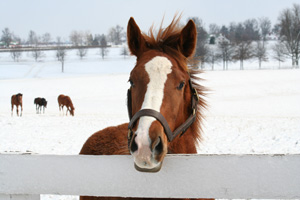
Companion animals aren't the merely animals in need of protection during the winter months. Livestock, including horses, have their own unique considerations and needs when the weather gets colder.
Recognize the importance of early veterinary care: Schedule a veterinary examination early on in the season to address whatever concerns before the harshest weather condition arrive. This is a good time to discuss vaccinations, nutritional supplementation, deworming, and other parasite treatment needs. Veterinary attention is especially of import for animals that are significant, and very young or very quondam animals may crave special attending.
Provide appropriate shelter from the elements: Livestock can generally tolerate cold temperatures, but wind, rain, or snow volition require a greater expenditure of calories. With that in listen, be certain they have a way to get out of the elements, especially the wind. Blankets tin can help protect horses, simply a structural shelter with proper ventilation and dry out bedding is the best method of protection. If you do blanket your horses, be sure to cheque underneath ofttimes for signs of injury, infection, or malnutrition.
Keep ice to a minimum to forbid injury, and call up to keep driveways articulate so veterinarians and farriers tin can access your animals. Prevent mud direction issues in the winter with proper preparation, whether that's through utilize of material similar gravel, sand, or woodchips, or through other methods.
Consider the corporeality and quality of feed: Besides taking shelter, livestock keep warm past expending energy, which ways they demand to swallow plenty calories to heat themselves. Consider talking with your veterinarian to develop a feed plan that meets your animals' nutritional needs. This may mean increasing the amount of feed available to your animals, and/or increasing the quality of feed. Very immature, very old, or ill animals will typically have additional nutritional needs during the winter compared to healthy, center-aged animals.
Ensure access to water: It is crucial that your herd has access to fresh and unfrozen water. Tank heaters or heated buckets can assist go on water at a temperature your animals are more comfortable drinking. Livestock will not consume acceptable amounts of water if it is near freezing, and consuming enough water is of import to your animals' wellness and well-being in wintertime months.
Source: https://www.avma.org/resources-tools/pet-owners/petcare/cold-weather-animal-safety
0 Response to "Keep Your Fur Babies During the Cold Meme"
Postar um comentário